The Whole Is Greater: Why Britain's Smartest Youth Programmes Have Stopped Chasing the Next Big Thing
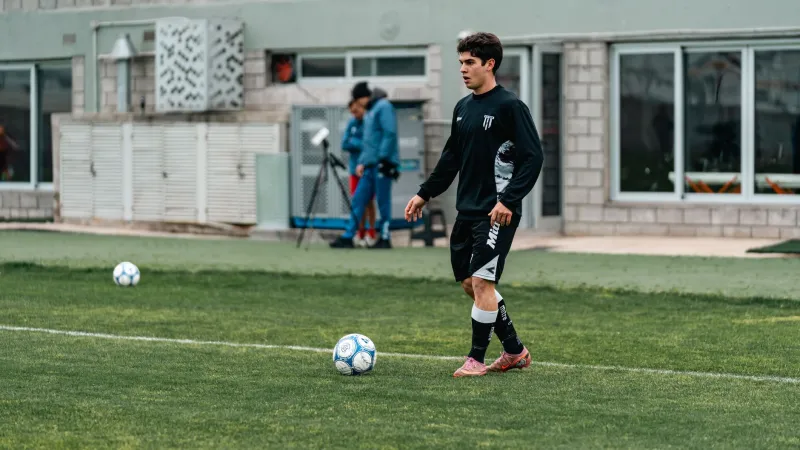
There is a particular mythology that runs through British youth football like a thread — the idea that every academy's purpose, distilled to its essence, is to find that one player. The exceptional talent who validates the entire enterprise. The name that will eventually appear on a first-team teamsheet and justify every hour of coaching, every scouted fixture, every parent conversation.
It is a compelling narrative. It is also, increasingly, a counterproductive one.
The Problem With Building Around Brilliance
The 'star model' of youth development — where resources, attention, and programme design orbit around one or two identified talents — has a seductive logic. Elite players do emerge from youth systems. Some of them were identifiable early. The model appears to work.
But the evidence, examined carefully, tells a more complicated story. The vast majority of players identified as exceptional at under-twelve level do not go on to professional careers. The predictive validity of early talent identification in football is, by the standards of most scientific fields, remarkably poor. And the programmes built around chasing individual brilliance frequently produce something damaging in the process: a culture in which the majority of players within any given cohort feel peripheral, conditional, and ultimately disposable.
The psychological consequences of that culture are significant. When young athletes understand — even implicitly — that the programme exists primarily for someone else's development, their own engagement becomes transactional. They are there to make the star look good. They provide numbers for training sessions. They are the context within which the exceptional player shines. And when they are eventually released — as the majority inevitably are — they leave with little sense that the programme ever truly invested in them.
"We used to talk about our best player constantly," admits one under-15 academy lead from the North West, reflecting on a deliberate shift in his programme's philosophy. "Every parent meeting, every coach discussion, every objective — it all came back to this one kid. And then he got injured for six months and we realised we had absolutely no idea how to develop the other twenty-two players in the squad. We'd been running a development programme with twenty-three players and only really developing one of them."
What Squad-First Culture Actually Produces
The alternative — building cohorts rather than hierarchies — is not a novel idea in elite sport. Rugby union's most successful national programmes have long understood that squad depth is a performance multiplier. County cricket structures have grappled with the tension between marquee talent and collective development for decades. In football, however, the individual brilliance model has proven stubbornly resistant to revision.
The academies that have made the shift describe a consistent set of outcomes. Training environments become more competitive when twenty players are developed with genuine intent rather than two. Technical standards across the group rise when coaching attention is distributed equitably. And perhaps most significantly, the culture within the squad changes in ways that benefit every player — including those who might, under a different model, have been identified as the programme's star assets.
"Our best players actually improved faster once we stopped treating them as untouchables," notes one development director at a non-league club whose under-16 programme has produced an unusually high number of players progressing into semi-professional football. "When you build a squad culture rather than a star culture, your best players are challenged by the players around them. They can't coast. They can't rely on the programme to manage their ego for them. The whole environment becomes more demanding — and that's what actually develops elite players."
The Metrics That Matter More Than Honours
One of the structural reasons the star model persists is that youth football's success metrics tend to reward it. Cup wins, tournament titles, and the number of players signed by professional clubs all receive disproportionate attention relative to measures that more accurately reflect development quality.
Progressively minded academies are beginning to track different things. What proportion of players from a given cohort are still playing competitive football at eighteen? How many have progressed into meaningful roles in the semi-professional game? What is the average improvement in technical benchmarks across the entire squad, not just the top performers? How many players leave the programme feeling that it contributed positively to their development as athletes and individuals?
These measures tell a different story from trophy cabinets — and they reveal a different hierarchy of successful programmes. The academies that perform best on development metrics are frequently not those producing the most headline-grabbing individual talents. They are those investing systematically in cohorts of fifteen to thirty players, building environments where the rising tide lifts every boat.
Culture as the Engine of Development
Perhaps the most significant insight from the programmes leading this shift is that culture is not a byproduct of development — it is the mechanism through which development occurs.
When young athletes feel genuinely valued, when they understand that the programme is invested in their growth regardless of where they currently sit in the squad hierarchy, they engage differently. They take risks in training. They ask questions. They support one another's development rather than competing in ways that inhibit collective learning. They stay in the sport longer, which — given that late development is a documented phenomenon across multiple sports — matters enormously.
Building that culture requires coaches to make deliberate choices that the star model actively discourages. It requires distributing meaningful game time across the squad rather than concentrating it in the hands of the most gifted. It requires giving every player in the cohort genuine feedback, genuine challenge, and genuine recognition. It requires resisting the institutional pressure to showcase exceptional individuals at the expense of collective growth.
A Different Kind of Success Story
The academies winning this argument are not, by and large, the ones making the most noise. They are smaller programmes, often below the Category One threshold, operating with modest budgets and significant ambitions. Their success stories are not the occasional first-team debutant but the cohort of twenty players who all progressed meaningfully — the goalkeeper who went from reserve to first choice, the winger who found his position, the central midfielder who developed the physical capacity to compete at the next level.
These are the stories that British youth football needs to learn to celebrate. Because they represent something more honest and more replicable than the mythology of the singular talent — and they speak to a model of development that serves young athletes rather than simply using them.
At The Shots Trust, our commitment is to the development of every young athlete in our community. Not the one. All of them.