The Invisible Exit: Recognising When Young British Athletes Are Leaving Without Walking Away

She still turned up to training every Tuesday and Thursday. She changed into her kit, completed the warm-up, and responded when her name was called. But something had shifted. Her coach noticed it first in the small things — the absence of the questions she used to ask, the silence where there had once been commentary on her own performance, the way she stopped lingering after sessions. By the time the formal conversation happened, she had already left. She simply had not yet told anyone.
This pattern — of psychological departure preceding physical withdrawal — is one of the more complex and underappreciated challenges in British youth sport. In workplace contexts it has acquired a name: quiet quitting. In athletic environments, the phenomenon is no less real, but it has received far less structured attention from those responsible for young people's development.
What Disengagement Actually Looks Like
The term 'quiet quitting' in sporting contexts does not describe laziness or a lack of effort in any straightforward sense. It describes a state in which a young athlete continues to participate in the surface behaviours of sport — attending sessions, completing drills, appearing at fixtures — while having fundamentally withdrawn their emotional investment from the process.
Dr Sarah Merton, a sports psychologist who works with several youth clubs across the West Midlands, describes the condition as 'motivated compliance without genuine engagement.' The player is doing enough to avoid conflict and to maintain the social connections that sport provides, but they are no longer developing, no longer challenging themselves, and no longer finding meaningful satisfaction in the environment.
"The difficulty," she explains, "is that these players often don't look disengaged to a casual observer. They're present. They're not causing problems. In a busy training environment with twenty players, they can go weeks or months without anyone recognising what's happening."
The Psychological Drivers
The factors that precipitate quiet disengagement in young athletes are varied, but several patterns emerge consistently in the research literature and in the accounts of practitioners working in youth development.
Autonomy erosion is among the most commonly cited. Adolescence is, by its nature, a period during which young people develop a heightened need for agency and self-determination. Coaching environments that are heavily directive — in which the adult voice dominates, decisions are rarely shared, and player input is not meaningfully sought — can create a sense of powerlessness that gradually extinguishes intrinsic motivation.
Burnout, too, is a significant contributor. The intensification of youth sport schedules in Britain over the past two decades has placed increasing physical and psychological demands on young athletes, often without adequate recovery or variation. When the experience of sport becomes synonymous with exhaustion and obligation rather than pleasure and challenge, withdrawal becomes a rational, if unconscious, response.
Peer dynamics also play a critical role. Young athletes are acutely sensitive to their social standing within a group, and experiences of marginalisation — whether through squad selection, playing time allocation, or the informal social hierarchies that develop within any team — can trigger a protective disengagement that shields the individual from further perceived rejection.
The Coaching Blindspots
Several coaching behaviours, while well-intentioned, can inadvertently accelerate the disengagement process. The first is the tendency to interpret quietness as contentment. In the absence of explicit complaint or visible distress, many coaches assume that a player who is not presenting problems is a player who is fine. This assumption fails to account for the social inhibitions that prevent many young people — particularly adolescent girls, though not exclusively — from articulating dissatisfaction directly.
A second blindspot concerns the overvaluation of compliance. Coaches operating under time pressure and with large groups frequently, and understandably, prioritise players who are easy to manage. The quietly disengaged athlete, by definition, does not create friction. Their gradual withdrawal can therefore go unremarked and even unconsciously rewarded, as the coach's attention is directed towards more demanding personalities.
Finally, there is the challenge of technical focus. In sessions oriented around skill acquisition and tactical development, the emotional and relational dimensions of player experience can receive insufficient attention. A coach monitoring passing accuracy and movement patterns may simply not be attending to the interpersonal signals that indicate psychological withdrawal.
Frameworks for Early Identification
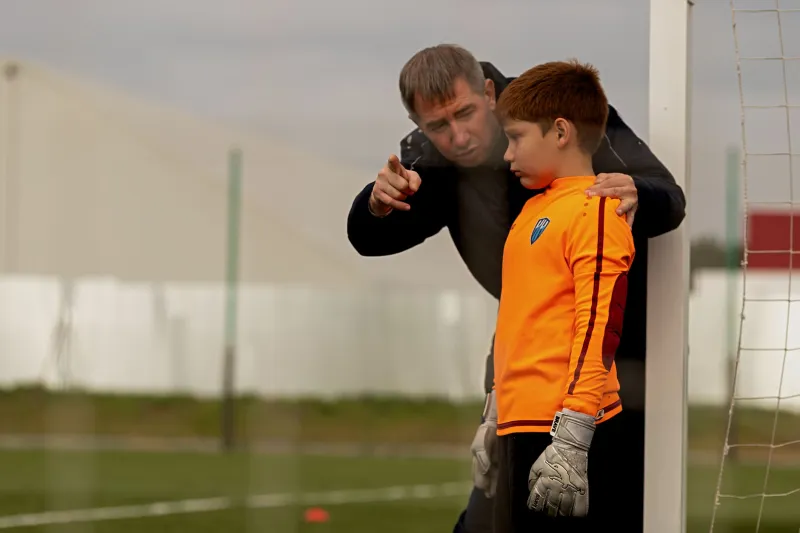
Practitioners who have developed effective approaches to identifying quiet disengagement tend to share a common emphasis: structured, low-pressure individual check-ins that create a genuine opportunity for honest communication without the social exposure of group settings.
One approach gaining currency in progressive British youth programmes involves brief one-to-one conversations conducted not in the immediate post-training environment — where players are often tired and socially guarded — but in lower-intensity contexts such as travel to away fixtures or informal moments before sessions begin. The aim is not to interrogate but to signal availability and interest.
Coach education programmes are also beginning to incorporate what some practitioners describe as 'engagement mapping' — a simple process by which coaches periodically and systematically reflect on the level of genuine participation they have observed across their squad, specifically looking for players whose behavioural profile has shifted over a period of weeks. The act of deliberate attention, practitioners argue, is itself a significant intervention.
Dr Merton advocates for what she terms 'motivational climate auditing' — a structured review of the emotional environment that a coaching programme creates, examining whether the dominant messages players receive are oriented around enjoyment, mastery, and belonging, or around performance, comparison, and selection pressure.
Why Retention Is a Development Issue
The consequences of unaddressed quiet disengagement extend well beyond the individual player's experience. At a systemic level, the loss of young athletes to invisible withdrawal represents a significant failure of British sport's development infrastructure. Many of the players who disengage quietly during early adolescence do not return to structured sport in any form. The skills, habits, and relationships that sport can provide — and that have documented long-term benefits for physical and mental health — are lost alongside the athletic potential.
For clubs and trusts committed to genuine youth development, the imperative is clear. Creating environments in which young people feel sufficiently safe and valued to express doubt, dissatisfaction, or diminishing motivation is not a soft or secondary concern. It is foundational to the mission. The athlete who can tell you they are struggling is one you still have the opportunity to help. The one who has already left, quietly and invisibly, may be beyond reach before you have noticed they were going.