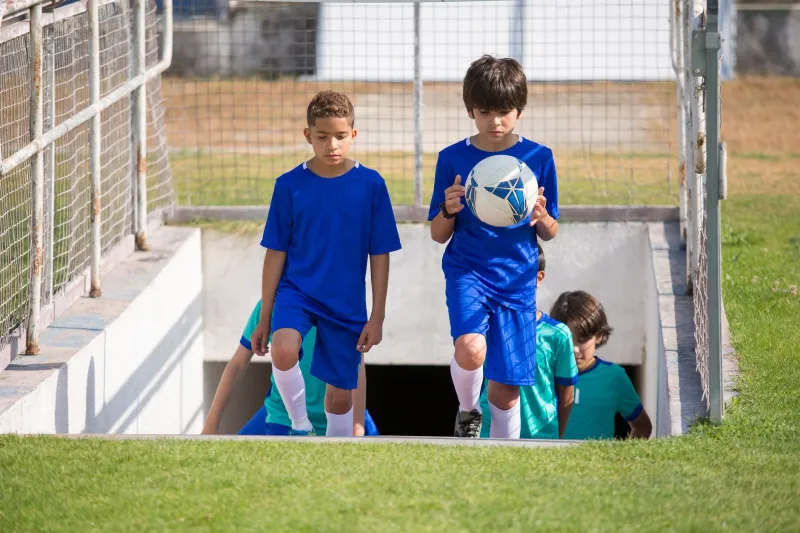
From the Bench to the Forefront: Transforming How British Youth Sport Values Its Substitutes
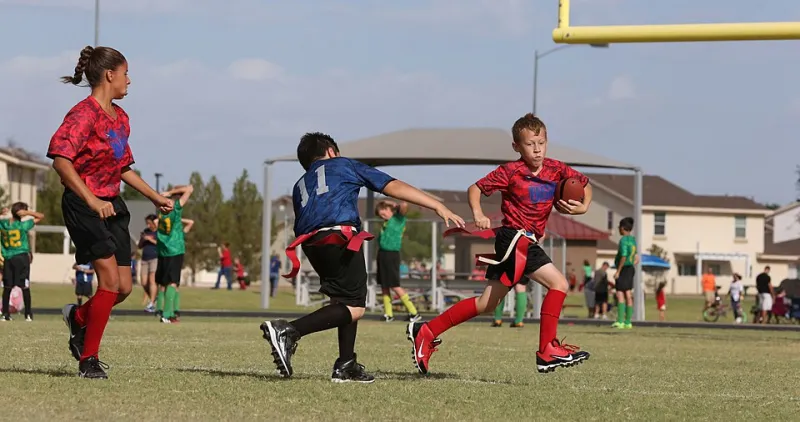
Photo: Cpl. Travis Gershaneck, Public domain, via Wikimedia Commons
There is a moment that many former youth footballers can recall with uncomfortable clarity. The coach reads out the starting eleven. Their name is not among them. They take their seat on the bench, arrange their expression into something that resembles composure, and spend the next forty minutes pretending that it does not matter — while every fibre of their adolescent psychology insists that it matters enormously.
This experience is near-universal in British youth sport, yet it remains one of the least examined aspects of how we develop young athletes. The substitute's bench is treated, in most grassroots and junior club environments, as a place of demotion. A necessary feature of squad management, certainly, but one whose psychological implications are rarely considered with the seriousness they deserve.
The evidence suggests that this oversight is costing British youth sport far more than it realises.
The Stigma and Its Origins
British sporting culture has a deeply embedded hierarchy of participation. To start is to be valued. To be substituted on is to be, at best, a useful afterthought. To be substituted off is, in the unspoken grammar of the touchline, a form of public criticism. These associations are absorbed by young athletes through observation long before any coach articulates them explicitly, and they are reinforced by the behaviour of parents, peers, and the wider sporting media landscape that young people consume.
For adolescents, whose sense of self-worth is already navigating the considerable turbulence of developmental psychology, the bench represents something far more significant than a tactical decision. Research in youth sport motivation — including work drawing on Self-Determination Theory, developed by Deci and Ryan — consistently demonstrates that young athletes' continued engagement with sport is closely tied to their sense of competence, autonomy, and relatedness. Repeated benching, particularly when communicated poorly or not communicated at all, undermines all three.
A survey conducted by the Youth Sport Trust found that perceived lack of playing time is among the most frequently cited reasons that young people in Britain disengage from organised sport in their teenage years. This is not a trivial finding. It describes a structural mechanism through which talent — and, more importantly, the joy of participation — is being systematically expelled from the game.
 Photo: Youth Sport Trust, via 4.bp.blogspot.com
What Sports Psychology Tells Us
The psychological literature on this subject is more developed than most grassroots coaches in Britain would have opportunity to encounter through standard coaching education. Studies examining the motivational climates of youth sports teams consistently distinguish between ego-involving environments — where success is defined by performance relative to others — and task-involving environments — where success is defined by personal improvement and effort.
In ego-involving climates, being a substitute is inherently stigmatising, because the implicit message is one of comparative inadequacy. In task-involving climates, the substitute's role can be framed as a specific developmental assignment — an opportunity to observe tactical patterns from a different vantage point, to enter a match with a defined objective, and to contribute to collective outcomes in ways that do not depend upon starting status.
The practical difference between these two environments is not primarily a matter of resources or expertise. It is a matter of language, intention, and consistency. Coaches who deliberately cultivate task-involving climates — who praise effort and learning rather than outcome, who communicate the rationale behind selection decisions, and who ensure that substitutes are given specific roles during the periods they are not on the pitch — produce squads with measurably higher retention rates and broader participation across all ability levels.
The Testimonial Evidence
The academic research is compelling, but it is the human stories that illuminate the real stakes. Speak to coaches and players across British grassroots football and a pattern emerges with striking regularity. A young player, perhaps thirteen or fourteen years old, finds themselves on the bench for three or four consecutive matches without explanation. They begin to detach from training sessions. Their parents, noting the change in their child's enthusiasm, begin to question whether the club is the right fit. Within a season, the player has left — not because they lacked ability, but because the experience of being a substitute was never framed as anything other than failure.
Conversely, coaches who have deliberately restructured their approach to squad management describe a different pattern. Players who are told, specifically and privately, that they are being asked to watch the first twenty minutes from the bench because the coach wants them to observe how the opposition's right-sided midfielder operates — and who are then asked to discuss what they noticed before they are introduced — report feeling genuinely engaged rather than marginalised. The bench becomes, in their experience, a classroom rather than a waiting room.
Practical Frameworks for Coaches
At The Shots Trust, we work with coaches across a range of junior and youth settings, and we have observed that the clubs which manage substitution culture most effectively share several common practices.
 Photo: The Shots Trust, via brightdrops.com
Individual pre-match conversations are perhaps the single most impactful intervention available to any coach. A brief, private exchange before the warm-up — in which the coach explains the selection decision in developmental rather than evaluative terms, and outlines what they want the player to focus on during the match — transforms the emotional experience of being named as a substitute. It communicates respect, maintains the player's sense of belonging, and gives them a task that sustains engagement.
Active bench roles extend this principle throughout the match. Substitutes who are given specific observational responsibilities — tracking an opponent's movement patterns, monitoring a tactical shape, counting pressing triggers — remain cognitively and emotionally connected to the game. They are not spectators. They are analysts in training.
Post-match inclusion is equally important. Coaches who structure their post-match reflections to include contributions from substitutes — asking them what they observed from their vantage point, what they would have done differently — signal that the squad is a collective enterprise in which every member's perspective carries value.
Transparent rotation policies, communicated to players and parents at the beginning of the season, remove much of the anxiety that surrounds selection decisions. When players understand in advance that minutes will be shared across the squad as a matter of deliberate policy, the bench loses much of its stigmatic charge.
A Cultural Challenge, Not a Tactical One
It is important to be clear about what this argument is and is not making. It is not suggesting that every player should start every match, or that competitive selection decisions should be abandoned in the name of inclusion. Elite youth sport requires honest assessment, and young athletes benefit from learning to navigate the realities of competitive environments.
What it is suggesting is that the manner in which selection and substitution decisions are communicated and contextualised has profound consequences for young people's psychological relationship with sport — consequences that extend well beyond any single match or season. A player who leaves the bench feeling informed, valued, and purposeful is a player who returns to training on Monday morning. A player who leaves it feeling dismissed is, statistically, a player who may not.
British youth sport has invested considerable energy in developing the technical and tactical dimensions of player development. The psychological infrastructure that surrounds those dimensions — including the culture of the substitutes' bench — deserves equivalent attention. Developing tomorrow's champions requires that we treat every member of the squad, regardless of their position on the teamsheet, as a champion in the making.