Too Much, Too Soon: The Hidden Damage of Pinning Leadership on Britain's Youngest Players

There is a moment, familiar to anyone who has stood on a junior football touchline, when a coach singles out a child and fastens an armband around their arm. The gesture is well-intentioned. The coach sees something — a vocal presence, a confident stride, an instinct to organise teammates — and decides to formalise it. The child beams. The parents applaud. And a leader, it is assumed, is born.
What happens next is rarely examined with the same care as the appointment itself.
Across Britain's under-sevens, under-eights, and under-nines, this ritual plays out on thousands of pitches every weekend. Clubs identify their most assertive or physically mature players and designate them as captains, often before those children have developed the emotional vocabulary to understand what leadership actually means. The armband, intended as a reward and a developmental tool, can become something altogether more complicated — for the child who wears it and for every child who does not.
What the Research Is Telling Us
Sports psychology has, in recent years, produced a compelling body of evidence that challenges the assumptions underlying early leadership assignment in youth sport. Studies examining the psychological impact of formal role designation in children aged six to ten consistently highlight two distinct but related problems.
For the child selected as captain, the experience frequently introduces a form of performance anxiety that is qualitatively different from ordinary match-day nerves. The child begins to monitor not only their own performance but their perceived authority over peers. When things go wrong — as they inevitably do in children's football — the emotional weight falls disproportionately on the designated leader. Mistakes feel public and consequential in a way they simply do not for their teammates.
For the children passed over, the dynamics can be equally damaging. Research into peer group formation in early childhood sport suggests that formal role hierarchies — even those as seemingly minor as a captain's armband — create psychological categories of belonging and exclusion. The child who is never chosen internalises a message about their perceived value within the group, often long before they have the cognitive tools to challenge or contextualise it.
"We talk a great deal about the child we've selected," observes one youth sports psychologist working with grassroots clubs in the South East. "We rarely talk about the six or seven children we haven't. But they're in that dressing room too, drawing their own conclusions."
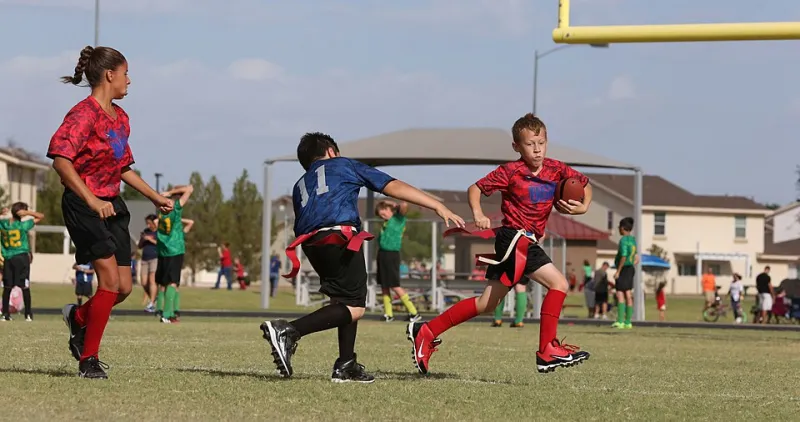
 Photo: South East, via brilliantmaps.com
The Maturity Illusion
A further complication is the well-documented tendency for coaches to conflate physical maturity with leadership potential. The relative age effect — the phenomenon whereby children born earlier in the academic year are disproportionately identified as talented and capable — is as prevalent in leadership selection as it is in talent identification.
A physically larger, more coordinated seven-year-old may present as authoritative and commanding on a football pitch simply because their body allows them to dominate space. This is not leadership. It is biology. Yet the armband follows the body rather than the character, and the child who receives it may spend the next decade performing a version of leadership they were never equipped to inhabit.
Meanwhile, the quieter child — perhaps born in the spring, perhaps still growing into their body — learns to occupy the role of follower long before their own leadership qualities have had the opportunity to surface.
The Case for Shared Responsibility
The Shots Trust advocates for a fundamentally different approach: one that distributes leadership responsibility across entire squads rather than concentrating it in a single child. This is not a radical concept. It is, in fact, how leadership functions in most adult professional environments.
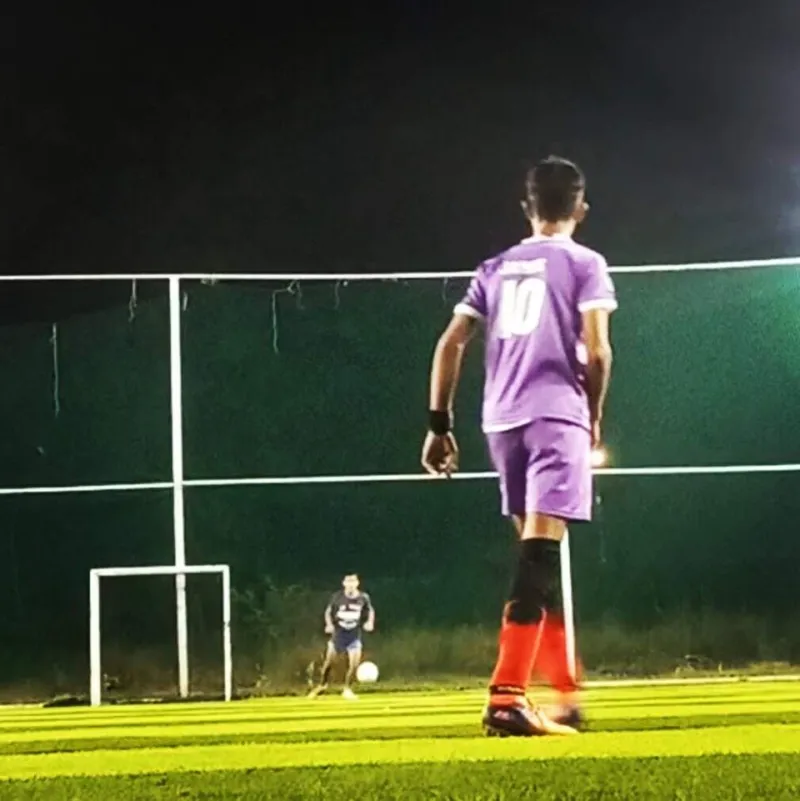
 Photo: The Shots Trust, via thumbs.dreamstime.com
A rotating captaincy model, in which every member of a squad takes on leadership responsibilities at different points across a season, offers several distinct developmental advantages. It allows children to experience authority in a low-stakes, supported context. It normalises the idea that leadership is a skill to be practised rather than a trait possessed by the few. And it removes the psychological burden — and the psychological exclusion — that fixed role assignment creates.
Coaches who have adopted this approach frequently report unexpected benefits. Children who were previously passive become more vocal when given the structural permission to lead. Children who were previously dominant learn to follow — a skill that, in the long run, may prove equally important.
"When we rotated the captaincy, something shifted in training," recalls one under-nine coach from a community club in Yorkshire. "The kids started listening to each other differently. They knew their turn was coming, so they paid attention to how it was done."
What Genuine Leadership Development Looks Like
Building authentic leadership qualities in young players requires patience, intention, and a willingness to move beyond the symbolic. An armband is not a curriculum. It is a prop — and like all props, it can be used well or poorly.
Effective youth leadership development begins with creating the conditions in which children feel safe enough to take initiative. It involves asking players to make decisions during sessions, to reflect on outcomes, and to consider the perspectives of their teammates. It means praising the child who encourages a struggling peer as warmly as the child who scores the winning goal.
It also means resisting the cultural pressure — from parents, from club traditions, from the professional game's obsession with captaincy mythology — to identify a leader as quickly as possible.
Britain's young footballers do not need a captain at seven. They need an environment in which every one of them is trusted, challenged, and given room to discover what kind of leader they might one day choose to be.
The Shots Trust believes that genuine leadership cannot be assigned. It must be grown — slowly, carefully, and with the whole squad in mind.