Quiet Quitters: The Burnout Crisis Draining Britain's Young Female Athletes from the Inside Out
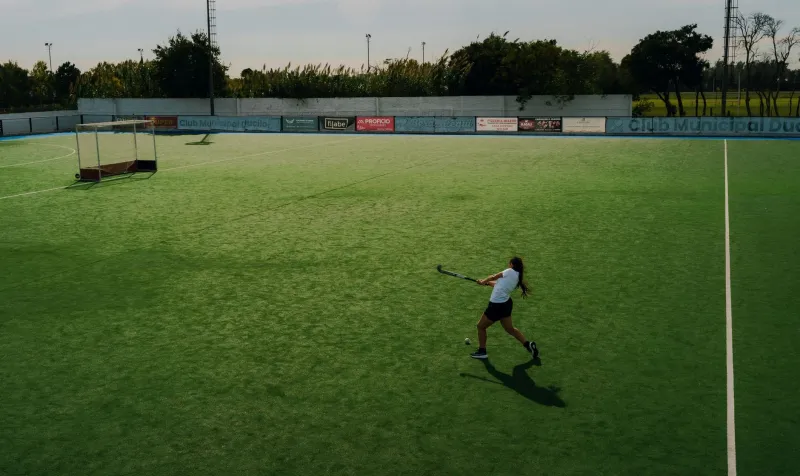
Every year, thousands of young women across Britain walk quietly away from competitive sport. They do not announce it dramatically. There is no injury to point to, no obvious falling-out with a coach, no single moment of failure. Instead, there is a gradual withdrawal — missed sessions, declining enthusiasm, a brightness behind the eyes that simply dims. By the time those around them recognise what is happening, the decision has frequently already been made.
Burnout in young female athletes is one of the most consistently underestimated challenges in British youth sport. It is distinct in its causes, its presentation, and its consequences from the burnout that affects young men. And yet the majority of clubs, academies, and community programmes continue to apply a broadly uniform framework to both — a framework that was, in most cases, designed with boys in mind.
The Specific Pressures Young Women Face
To understand burnout in this context, it is necessary first to acknowledge that young female athletes in the UK operate within a dual set of expectations that their male peers rarely encounter with the same intensity. They are expected to perform athletically to an increasingly high standard while simultaneously navigating social pressures around appearance, femininity, and likeability that are deeply embedded in British school culture and, frequently, in sport itself.
Research consistently shows that adolescent girls are more susceptible to what psychologists term 'socially prescribed perfectionism' — the internalised belief that one must meet the standards others hold for them. In a sporting environment, this manifests as an athlete who trains relentlessly not because she loves the process, but because she fears the consequence of being perceived as inadequate. The external signs can look, to the untrained eye, like commitment and dedication. The internal reality is something considerably more damaging.
This is compounded by the fact that female athletes are statistically more likely to experience the Female Athlete Triad — the interconnected conditions of low energy availability, menstrual dysfunction, and reduced bone density — a physiological consequence of the caloric deficits that often accompany intense training schedules. British clubs, particularly at grassroots level, remain poorly equipped to identify or address this triad. Many coaches are unaware it exists.
What Burnout Actually Looks Like
Parents and coaches are often searching for the wrong signals. They expect burnout to look like exhaustion, like an athlete who simply cannot run any further. In reality, the early indicators are considerably more subtle.
A young woman beginning to experience burnout may become emotionally detached from outcomes she previously cared about deeply. She may become irritable in the changing room, reluctant to discuss training, or suddenly preoccupied with minor physical complaints that provide a socially acceptable reason to step back. She may begin to perform inconsistently — not because her physical capacity has diminished, but because her psychological investment in the outcome has quietly retreated.
One of the most significant warning signs that British clubs routinely overlook is perfectionism in decline. An athlete who was previously meticulous about her preparation and begins to disengage from those rituals is not becoming lazy. She may be protecting herself from an environment in which she no longer feels psychologically safe enough to try.
The Systemic Gaps in British Youth Sport
The structural differences between boys' and girls' youth sport in Britain create conditions in which female athlete burnout is not merely possible but, for many, almost inevitable without deliberate intervention.
Girls' football, netball, hockey, and athletics programmes at community level frequently operate with fewer resources, less qualified coaching staff, and reduced competitive calendars compared to equivalent boys' programmes. Paradoxically, this relative scarcity does not protect young women from overtraining — it often means that the talented few are overutilised by their clubs, playing in multiple age groups simultaneously, travelling greater distances, and receiving less structured recovery guidance.
At the same time, the psychological support infrastructure that exists within elite male academies — sport psychologists, welfare officers, mentorship programmes — is rarely replicated in the girls' equivalents. Young female athletes are, in many instances, expected to manage the mental demands of elite sport with no formal support beyond the goodwill of individual coaches.
Building Resilience Without Burning Bridges
The answer is not to reduce the ambition we hold for young female athletes. It is to create environments in which that ambition is sustainable.
Clubs and trusts working in youth development should prioritise the following practical measures. First, training periodisation must account for the physiological realities of adolescent female development, including hormonal cycles and their documented impact on injury risk and recovery. This is not a marginal consideration — it is a fundamental aspect of responsible coaching.
Second, psychological safety must be cultivated deliberately. Young women need to know that their value within a squad is not contingent solely upon performance. Coaches who build relationships founded on genuine interest in the whole person — not merely the athlete — create environments in which early signs of distress are far more likely to surface before they become crises.
Third, open conversations about mental health must be normalised within the culture of the club. British sport has made meaningful progress in recent years in destigmatising mental health discussion among male athletes. That progress has been slower to reach girls' and women's programmes, and the gap must be closed urgently.
Finally, parents have a critical role to play. The post-match and post-training conversations that happen in cars on the way home carry enormous psychological weight. A parent who consistently frames sport in terms of outcome and performance — however well-intentioned — may inadvertently reinforce the very pressures that are driving their daughter towards the exit.
The Cost of Getting This Wrong
Britain cannot afford to continue losing talented young female athletes to a process that is, in many respects, entirely preventable. The broader societal benefits of keeping girls active and engaged in competitive sport are well-documented — in physical health, in mental wellbeing, in leadership development, and in the social confidence that organised sport uniquely fosters.
At The Shots Trust, we believe that developing tomorrow's champions means attending to the whole athlete — her physiology, her psychology, her circumstances, and her sense of belonging within the sport she has chosen. For Britain's young female athletes, that commitment is not optional. It is the foundation upon which everything else depends.
The quiet ones who leave without a word deserve better. And the clubs they leave behind must be honest enough to ask why they went.