Beyond the Boundary Line: Why Britain's Cage Pitches Are the Untapped Frontier of Football Development
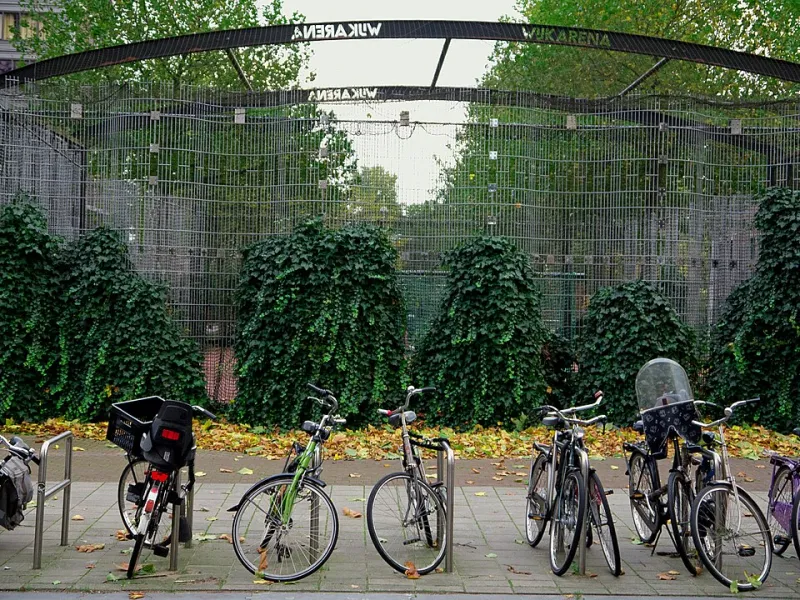
Photo: Fons Heijnsbroek from Amsterdam, Netherlands, CC0, via Wikimedia Commons
Beyond the Boundary Line: Why Britain's Cage Pitches Are the Untapped Frontier of Football Development
Drive through any British city on a weekday evening and the evidence is there, if you know where to look. On the concrete courts of inner-city Manchester, teenagers conduct elaborate one-touch passing sequences in the gathering dusk. On a caged astroturf surface in Lewisham, a group of twelve-year-olds play a form of five-a-side that bears little resemblance to the structured, coach-directed sessions happening simultaneously at a grass facility three miles away — and is, in several important respects, considerably more technically demanding.
Britain has invested substantially in urban sporting infrastructure over the past two decades. Multi-use games areas, popularly known as MUGAs, were installed in their thousands following government initiatives in the early 2000s. Cage pitches proliferated across council estates, school grounds, and public parks. The intent was to provide accessible, free-to-use space for young people in communities where private leisure facilities were financially out of reach.
The infrastructure exists. What has largely failed to materialise is any serious, systematic attempt to harness it for formal youth development purposes.
The Accidental Training Ground
There is a certain irony in the fact that the environments most likely to produce technically gifted, street-wise footballers in modern Britain are the ones that formal coaching structures have almost entirely ignored. The cage pitch, by its very nature, creates conditions that youth development theory has spent decades trying to replicate artificially on grass training grounds.
The compressed space demands rapid decision-making. The hard, true surface rewards precise touch. The walls — rather than interrupting play — keep it continuous, removing the dead time of throw-ins and goal kicks that fragments conventional small-sided games. The absence of adult instruction forces players to solve problems independently, developing the kind of football intelligence that coaches frequently describe as the most difficult quality to teach.
This is not a new observation. The role of street football in producing technically exceptional players has been documented extensively in the academic literature on talent development, and is a recurring theme in the biographies of British football's most gifted individuals from previous generations. What is new — and what makes the current situation particularly frustrating — is that the physical spaces for this kind of play still exist across urban Britain, yet the children most likely to use them are doing so in a developmental vacuum, entirely disconnected from the formal coaching structures that could help them translate raw street ability into recognised footballing potential.
Why Formal Coaching Stays Away
The reasons that structured youth development programmes have not engaged more seriously with urban cage environments are multiple and, to some extent, understandable. Insurance liability in non-standard environments presents administrative complexity. The absence of changing facilities, floodlighting, and formal pitch markings creates logistical challenges for organisations accustomed to operating in managed grass settings. Some coaches express concerns about safeguarding in environments that are publicly accessible and difficult to control.
There is also, it must be said, a cultural dimension. British youth football's coaching culture has historically been orientated around the grass pitch as the legitimate site of development. The cage pitch carries associations — of informality, of roughness, of the unregulated — that some within the formal game find difficult to accommodate within their professional identity.
"I think there's a snobbishness about it, if I'm honest," says Marcus Webb, a UEFA B licence holder who has been running sessions on cage pitches in Birmingham for three years. "When I told people what I was doing, the initial reaction was almost embarrassment on my behalf. As if taking football to a concrete court was somehow beneath the standard of proper coaching. That attitude needs to change, because these environments are producing extraordinary players who we are completely failing to identify."
The Pioneers
Webb is part of a small but growing cohort of coaches who have deliberately relocated their development work into urban street environments, motivated by a combination of philosophical conviction and pragmatic talent identification instincts.
In Liverpool, a community coach named Steph Okafor has been running unstructured cage sessions in Toxteth for eighteen months, offering a deliberately light-touch facilitation model that preserves the organic, player-led quality of the existing street game whilst introducing periodic technical challenges and reflective conversations. Several of the young players she has worked with have subsequently been referred to formal club environments — players who, by their own account, had no intention of joining a conventional youth club and would never have been reached through traditional recruitment channels.
In Glasgow, a partnership between a community trust and a local authority has installed a part-time coach at three cage facilities in the East End, with sessions deliberately scheduled to coincide with the informal evening play that already takes place in those locations. The model is deliberately non-prescriptive: the coach participates rather than directs, observes rather than corrects, and builds relationships over weeks before introducing any formal developmental content.
These are encouraging examples. They are also, in the context of the national picture, isolated exceptions.
The Talent We Are Not Seeing
The developmental argument for engaging with urban cage environments is compelling. The talent identification argument is, if anything, more urgent still.
Britain's formal youth football talent identification system is structurally biased towards players who are already within the organised game. Academy scouts attend grassroots matches and school competitions. They do not, as a rule, attend cage pitch sessions in Salford or Hackney or Chapeltown. The players who are developing their football outside the formal system — often the most technically creative and physically robust, forged by years of competitive, unstructured play — are largely invisible to the structures that exist to identify and nurture talent.
This is not a marginal concern. Research into talent identification consistently finds that elite youth recruitment systems disproportionately favour players from more affluent backgrounds, in part because those players are more likely to be embedded within the organised club structures where scouts operate. The cage pitch, by contrast, is a democratic space — one that attracts players regardless of family income, postcode, or cultural background. It is precisely the kind of environment that could help British football access the full breadth of its talent pool, if anyone with formal authority chose to look there.
A Call for Structural Engagement
At The Shots Trust, we are committed to the principle that development opportunities should be available to every young person with the desire to improve, regardless of their circumstances or their connection to formal sporting structures. The urban cage pitch represents one of the most significant untapped resources in British youth football — not because it needs to be transformed into something else, but because it already works, and the game has simply chosen not to notice.
What is needed is not a wholesale formalisation of street football, which would risk destroying the very qualities that make it developmentally valuable. What is needed is a deliberate, respectful, and culturally sensitive effort to build bridges between the formal and informal game — to bring coaching expertise into cage environments on the environment's own terms, and to create pathways through which the talented, unrecognised players in those spaces can access the development opportunities they currently cannot reach.
The infrastructure is already there. The players are already there. The only thing missing is the will to meet them where they are.