Second Tier, First Class: Why Britain's Overlooked Academies Are Quietly Winning the Development Race
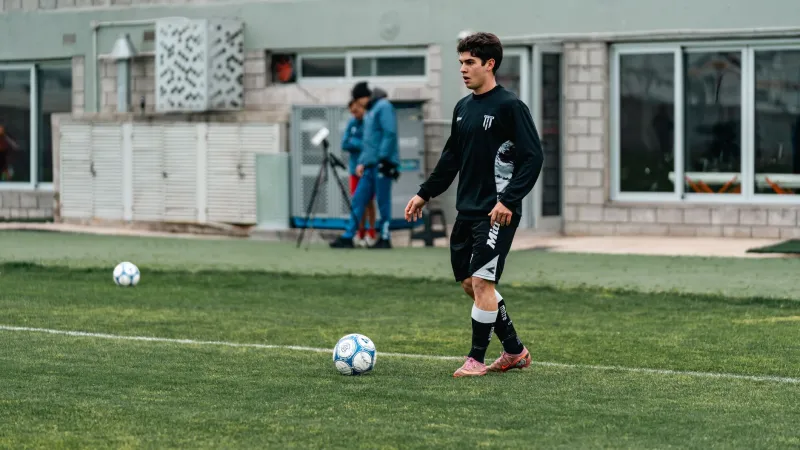
The orthodoxy in British youth football development is relatively straightforward: the bigger the club, the better the academy; the better the academy, the better the player. Follow the money, follow the talent. It is a logic that shapes everything from scouting priorities to parental ambitions, and it has been largely unquestioned for the better part of two decades.
It may also be substantially wrong.
A growing body of evidence — drawn from player career trajectories, coach testimonies, and comparative development outcomes — suggests that Britain's mid-tier and regional academies are, in many measurable respects, producing more well-rounded, more resilient, and ultimately more durable athletes than their elite counterparts. The reasons are instructive, and they carry implications that extend well beyond football.
The Paradox of Constraint
Category Three and Category Four academies in England — the clubs outside the Premier League and Championship elite — operate on budgets that their top-flight counterparts would consider negligible. They cannot offer the same facilities, the same sports science support, or the same coaching-to-player ratios. On paper, this is a disadvantage.
In practice, it frequently produces something more valuable: creativity.
"When you don't have four analysts and a dedicated fitness team, you have to be a better coach," says Phil Davenport, who runs the under-16 programme at a League Two club in the East Midlands. "You can't hide behind technology. You have to actually understand your players, understand what they need on any given day, and find solutions with what you've got."
This enforced ingenuity, repeated across hundreds of sessions over multiple years, produces coaching staff who are intimately familiar with the full spectrum of youth development. They cannot delegate the psychosocial dimensions of their role to a specialist. They cannot outsource the relationship-building. They do it themselves, and they become exceptionally good at it.
Pressure, Performance, and the Space to Fail
Elite academies carry a weight that is rarely acknowledged publicly: the weight of institutional expectation. At a Premier League club, an under-14 squad is not merely a development group — it is a commercial asset, scrutinised by recruitment staff, monitored by performance analysts, and subject to release decisions that can define a young person's relationship with sport for years.
In that environment, risk-taking — the creative, exploratory behaviour that underpins genuine skill development — becomes psychologically costly. Young players learn, often without anyone telling them explicitly, that mistakes are dangerous. They play to avoid failure rather than to discover capability.
The contrast at mid-tier academies can be striking. Without the same institutional pressure, coaches are freer to allow experimentation. A winger can try an ambitious dribble without fearing it will appear on a performance report. A goalkeeper can work on distribution without anxiety about a first-team pathway being reassessed.
"The boys here know they're not one bad game away from being released," explains Sandra Kowalski, who coaches the under-15 girls' programme at a National League club in the North West. "That security changes everything about how they train. They try things. They make mistakes. They learn. That's the process, and we protect it."
Case Studies in Unlikely Success
The career of Daniel Harte — now a professional at a Championship club — illustrates the pattern with particular clarity. Released by a Premier League academy at 14, Harte joined a Category Four programme in the South West, where he spent three formative years under a coaching team that prioritised technical versatility over positional specialisation.
"They played me everywhere," he recalls. "Left back, central midfield, even a few games up front. At the time I found it frustrating. Looking back, it gave me an understanding of the game that players who stayed in the big academies don't always have. I knew how to read different situations because I'd been put in them."
Harte's trajectory — from overlooked to professional — is not exceptional. Across Britain, a significant proportion of the players currently performing at Championship and League One level passed through mid-tier academy structures at some point in their development. The elite pathway, it turns out, is not the only route to professional football.
Community as a Developmental Asset
One dimension of mid-tier academies that receives almost no attention in development discourse is their relationship with the communities they serve. Unlike elite clubs, which often recruit nationally and whose academy players may travel considerable distances to train, regional academies tend to draw from concentrated local areas. Players grow up together, train with friends, and remain embedded in the social networks that existed before football became their primary identity.
This grounding matters more than it might appear. Research consistently demonstrates that athletes with strong social support networks outside sport are more resilient under pressure, more capable of managing setbacks, and less vulnerable to the identity crises that frequently accompany injury or release.
"These kids are still going to the same school, still playing out with the same friends," says Davenport. "Football is important to them, but it isn't everything. That balance makes them tougher, mentally. They have a life outside the academy, and that life sustains them when things get difficult."
What Elite Academies Could Learn
The purpose of this analysis is not to diminish the genuine achievements of Britain's elite development centres, which have produced remarkable players and continue to invest significantly in coaching quality. It is, rather, to challenge the assumption that resource intensity is synonymous with developmental excellence.
The mid-tier academies that are producing well-rounded athletes are doing so through an emphasis on coaching relationships, creative problem-solving, and the preservation of psychological safety. These are qualities that do not require a Category One budget. They require intention, consistency, and a clear-eyed understanding of what youth development is actually for.
At The Shots Trust, our conviction is that every young athlete deserves an environment in which they can develop fully — technically, psychologically, and as human beings. The evidence from Britain's overlooked academies suggests that such environments are being created, often brilliantly, with far less than the system assumes is necessary.
The question for the elite end of the game is not whether they can learn from this. It is whether they are willing to.