Road to the Rounds: Your Complete Guide to Entering and Competing in the FA Youth Cup

Few competitions in British football carry the weight of history that the FA Youth Cup does. Since its inaugural edition in 1952, the tournament has served as a proving ground for generations of players who would go on to define the professional game. The names associated with its early rounds and famous finals — Best, Beckham, Owen, Rooney — are woven into the fabric of the sport's identity.
 Photo: FA Youth Cup, via cdn.wba.co.uk
Yet for every club that has savoured a famous cup run, there are dozens more that have never entered. Some are unaware of their eligibility. Others are daunted by the administrative process. Many assume the competition is the exclusive preserve of professional academy sides and do not realise that community and grassroots clubs can and do participate — and occasionally produce results that resonate far beyond their local area.
This guide exists to change that. If your club fields youth players and harbours even a modest ambition to test itself against the wider football world, the FA Youth Cup is a journey worth beginning.
Understanding Eligibility
The FA Youth Cup is open to all clubs affiliated to the Football Association, which encompasses the vast majority of registered clubs in England. The competition is contested at under-18 level, meaning players must be under eighteen years of age at midnight on 31 August of the relevant season.
Clubs entering the competition must hold current FA affiliation and be registered with their relevant County Football Association. If your club is already participating in a recognised league structure — whether at Step 7 of the National League System or within a local junior league — you are almost certainly eligible to enter.
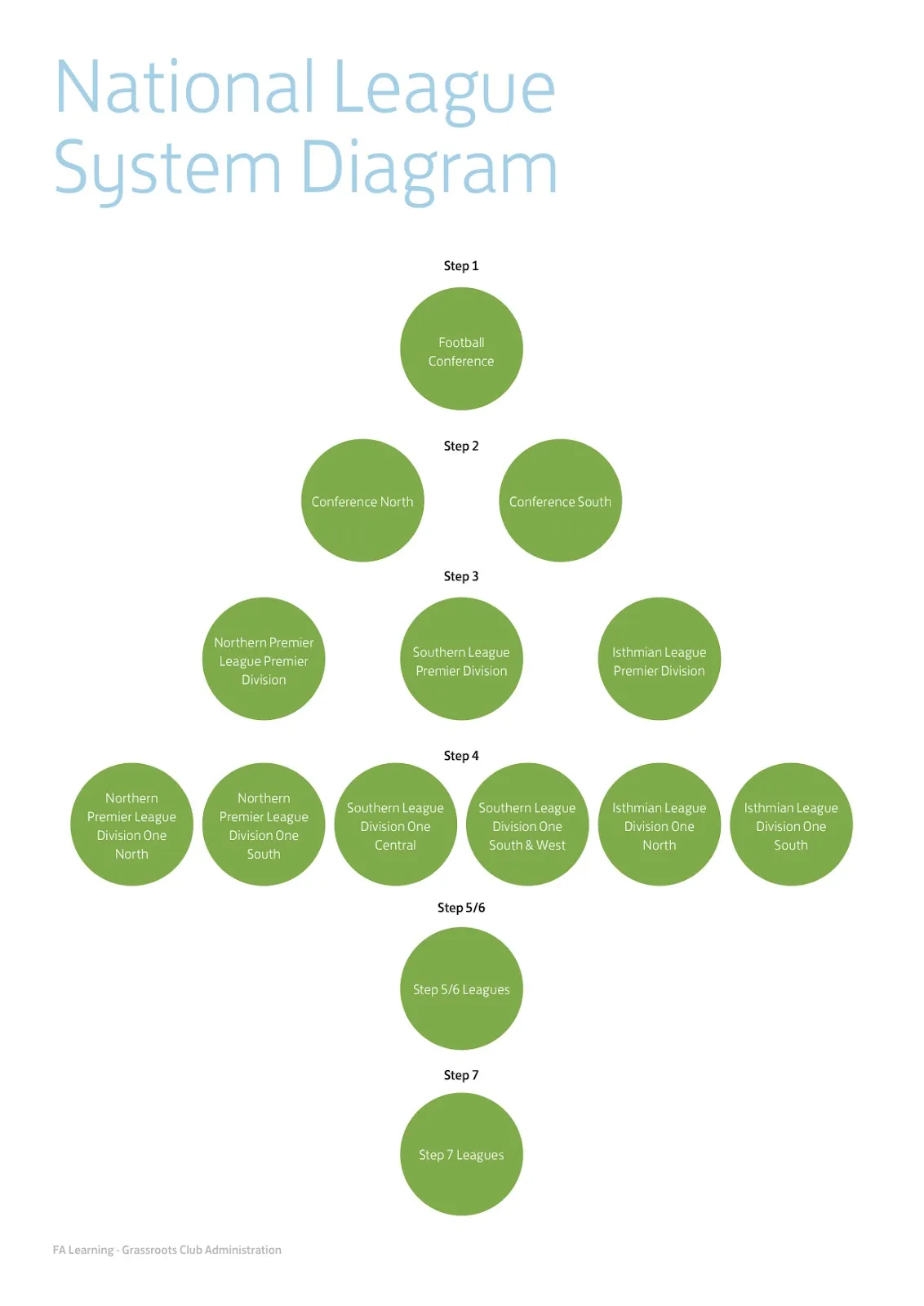 Photo: National League System, via 4.bp.blogspot.com
Professional clubs with Category One and Category Two academies enter at later stages of the competition, meaning grassroots and non-league sides begin their journey in the earlier qualifying rounds, where the opposition is drawn from a similar level. This is a deliberate structural feature that gives community clubs a genuine opportunity to build momentum before potentially encountering academy opposition.
Registration: Deadlines and Process
Entry to the FA Youth Cup is managed through the FA's online competition management system. Clubs should register their intent to enter before the published deadline, which typically falls in the late summer — usually July or August — ahead of the season in which the competition takes place.
The registration process requires clubs to confirm their affiliated status, submit a list of eligible players, and pay the relevant entry fee. The fee structure is modest and is reviewed annually by the FA; it should not represent a prohibitive barrier for any affiliated club.
It is strongly advisable to designate a specific club official — a secretary or youth coordinator — as the primary point of contact for all cup-related correspondence. The FA communicates draw information, fixture deadlines, and administrative requirements through official channels, and missed communications can result in walkovers or disqualification.
Clubs should also familiarise themselves with their County FA's own cup competitions, as some counties operate parallel youth cup structures that run alongside the national competition and may share eligibility requirements.
Preparing for the Draw
Once registered, clubs are allocated to a regional section of the draw. The early qualifying rounds are typically regionalised to minimise travel demands, with sides drawn against clubs from within their county or neighbouring counties.
When the draw is made, clubs should immediately confirm the fixture date with their opponents and begin the process of ground registration if matches are to be played at home. The FA requires that venues meet minimum standards for Youth Cup fixtures, including appropriate changing facilities and pitch markings. Clubs uncertain about their ground's eligibility should seek guidance from their County FA as early as possible.
Travel planning for away fixtures should begin promptly, particularly for clubs in rural areas where transport logistics can be complex. Many grassroots clubs rely on parent volunteers for transport; establishing a clear and reliable system well in advance reduces the risk of last-minute disruption.
Tactical and Physical Preparation
The FA Youth Cup is a knockout competition, which introduces a psychological and tactical dimension that differs significantly from league football. In a league, a poor performance can be absorbed and recovered from over subsequent weeks. In a cup, there is no second chance.
Coaches preparing their squads for cup football should consider several distinct aspects of preparation. First, the squad's physical readiness: knockout matches frequently go to extra time, and sides that have not trained for extended periods of play are at a significant disadvantage in the closing stages. Incorporating longer training sessions and conditioning work in the weeks before a cup fixture is a straightforward but often overlooked measure.
Second, tactical flexibility: cup opponents may play in unfamiliar systems or employ specific strategies designed to frustrate and contain. Spending time in training on adaptability — on reading and responding to different formations and pressing styles — prepares players for the unexpected.
Third, set-piece preparation: in tight knockout matches, dead-ball situations frequently decide outcomes. Investing dedicated session time in both attacking and defensive set-piece organisation can yield a significant competitive return.
The Mental Demands of Knockout Football
Perhaps the most underestimated aspect of cup competition at youth level is its psychological intensity. Young players who are accustomed to the rhythms of league football — where form fluctuates and points accumulate gradually — can find the binary nature of cup football disorienting.
Coaches play a critical role in framing the cup experience positively, regardless of outcome. Before a fixture, the emphasis should be on preparation and process rather than on the consequence of elimination. During the match, clear and calm communication from the touchline helps players stay present rather than becoming overwhelmed by the occasion.
After a defeat, the debrief is as important as any post-match conversation in a league season. Young players who have invested emotionally in a cup run need structured support in processing disappointment — not to diminish it, but to contextualise it as a normal and valuable part of athletic development.
For clubs that progress into later rounds, the growing profile of the competition can bring its own pressures. Local media coverage, larger crowds, and the awareness of facing academy opposition for the first time are all factors that benefit from proactive psychological preparation.
Learning from Clubs Who Have Been There
Some of the most instructive perspectives on FA Youth Cup participation come from clubs that have made unexpected progress — non-league sides that have reached the second or third qualifying round, or community clubs that have pushed a professional academy all the way to extra time.
The consistent lesson from these clubs is that organisation and belief outperform resources more often than the professional game's hierarchy would suggest. A well-coached, well-prepared, and cohesive squad will frequently exceed expectations, because the cup's format compresses the advantage that superior resources might otherwise confer over a longer campaign.
The Shots Trust encourages every eligible club to enter the FA Youth Cup not merely for the possibility of a famous result, but for the developmental experience the competition provides at every stage. The registration process, the tactical preparation, the mental demands of knockout football — all of it contributes to the formation of better players and better people.
Wembley Way begins on a community pitch. It begins with a registration form and a belief that your players deserve the chance to find out how far they can go.