Crossing the White Line: Why Britain's Best Coaching Minds Are Leaving the Academy System Behind
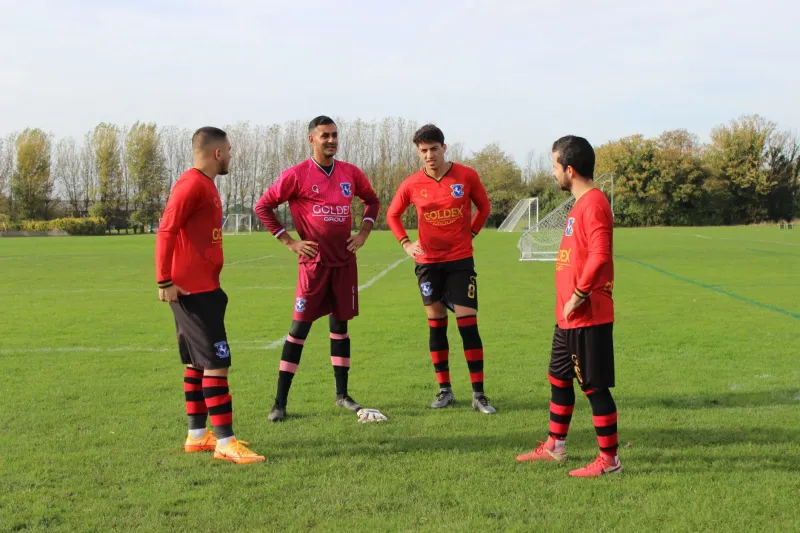
Crossing the White Line: Why Britain's Best Coaching Minds Are Leaving the Academy System Behind
Every summer, the football world holds its breath for the transfer window. Supporters refresh their screens, journalists stake out training grounds, and clubs brace for the financial theatre of player movement. Yet running parallel to all of this spectacle is a quieter, far less scrutinised market — one that may ultimately prove more consequential for the long-term health of British football. Coaches are moving. And not always in the direction you might expect.
Across the country, a growing number of highly qualified, deeply experienced coaches are stepping away from professional academy environments and planting themselves in the soil of grassroots and semi-professional football. Some arrive from Premier League under-development setups. Others come from EFL academies that are tightening their belts in response to financial pressures. All of them bring with them a curriculum of expertise that is beginning to transform the clubs fortunate enough to receive them.
The Pull of the Grassroots
To understand why a UEFA A or Pro Licence holder might turn down a salary at a Category One academy in favour of a volunteer-led community club, you first need to understand what many describe as the slow suffocation of creative coaching within professional structures.
"The academy environment can be extraordinary," explains one former Premier League under-18s coach who now works with an FA Charter Standard club in the East Midlands. "The facilities, the medical support, the analysis tools — none of that is available at grassroots level. But what I found, over time, was that I was coaching the system rather than the player. Every session had to align with a club-wide philosophy document. Every drill was benchmarked. The children were brilliant, but I wasn't sure I was making them better — I was making them compliant."
 Photo: East Midlands, via ontheworldmap.com
This tension between institutional conformity and individual coaching identity surfaces repeatedly in conversations with those who have made the move. The professional academy, for all its resource advantages, can be an environment that demands standardisation. Grassroots football, for all its limitations, frequently offers something more valuable: freedom.
What Grassroots Clubs Gain
The impact of these coaching migrations on receiving clubs can be transformative in ways that extend well beyond tactical sophistication. When a coach arrives with experience of elite periodisation, long-term athletic development frameworks, and structured player profiling, the entire culture of a club can shift.
At a community club in the North West, the arrival of a former Championship academy coach three seasons ago prompted a wholesale review of the club's training methodology. Session planning moved from ad hoc to deliberate. Warm-up protocols were redesigned. Parents were invited to monthly briefings on the club's developmental philosophy. Youth retention improved markedly in the first year.
 Photo: North West, via akns-images.eonline.com
"We went from losing half our under-14 squad every summer to keeping nearly all of them," the club's youth director notes. "When young players feel they are being coached properly — when they see that someone is genuinely invested in their development — they stay."
These outcomes are not anomalies. Research into coaching quality as a driver of youth retention consistently identifies the coach-player relationship as one of the primary determinants of whether a young person continues in sport beyond the age of fourteen.
The Flow in Both Directions
It would be misleading to characterise this coaching migration as a one-way movement. Equally significant — and perhaps equally underappreciated — is the journey made by grassroots coaches who earn their qualifications through community football and subsequently attract the attention of professional clubs.
Several EFL academies have, in recent years, made a deliberate effort to recruit coaches from non-league and amateur environments, recognising that individuals who have learned to achieve results without resources often possess a creativity and adaptability that a fully funded academy environment can inadvertently discourage.
"When you've run a session with ten balls, a borrowed bib, and a pitch that slopes six feet from end to end, you learn to improvise," says one coach who made the transition from Sunday league management to an EFL League One academy role. "I brought that problem-solving instinct with me. I think that surprised a few people."
The Systemic Question
What this coaching market reveals, more than anything, is a structural imbalance at the heart of British football development. The resources, prestige, and formal career pathways are concentrated almost exclusively within the professional game, yet the vast majority of young players — and the vast majority of transformative coaching moments — occur well outside it.
Organisations such as The Shots Trust have long argued that investing in coach education and support at the grassroots level is not a charitable act but a strategic one. The talent pipeline that feeds professional football begins on community pitches, and the quality of coaching on those pitches determines the quality of what eventually emerges.
If Britain is serious about developing a generation of technically sophisticated, psychologically resilient players, it must take the coaching market as seriously as it takes the player market. The most consequential transfers of any given year may not involve a single footballer.
A Call for Recognition
The coaches who cross the white line — moving between the professional and community game in either direction — deserve far greater acknowledgement than they currently receive. Their mobility enriches both environments and challenges the artificial hierarchy that has long separated elite and grassroots development.
The Shots Trust believes that British football's future depends not on which club signs which teenager in August, but on the quality and continuity of the coaching relationships that shape those teenagers in the years before anyone is paying attention. That is the transfer window worth watching.