Power Without Purpose: The Training Misconceptions That Are Holding Back Britain's Young Athletes
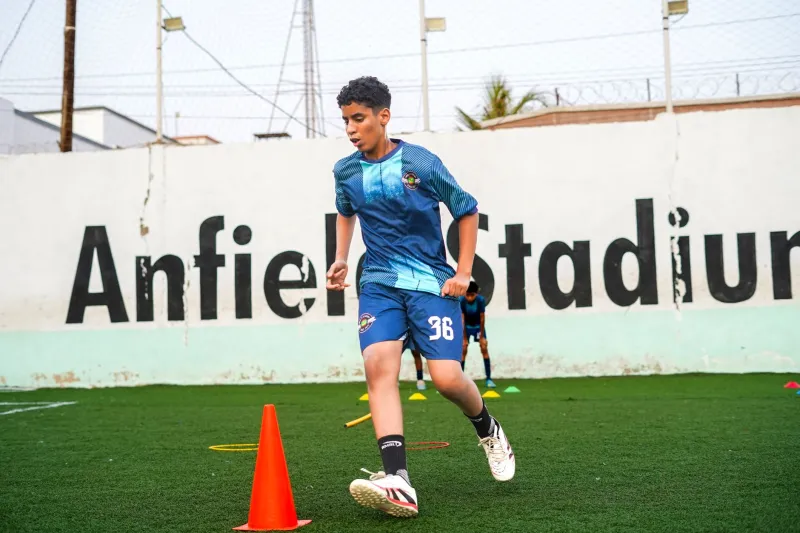
Walk into a gym attached to any reasonably well-resourced British youth sports programme and the scene is likely to be familiar. Teenagers moving through bench press stations, performing barbell squats under the supervision of a well-meaning coach, completing sets of bicep curls in the mirror. The intention is sound. The execution, in many cases, is not — and the difference between intention and execution in physical development at youth level carries consequences that can persist throughout an athlete's career.
The conflation of gym-based strength training with genuine athletic power development is one of the more persistent and damaging misconceptions in British youth coaching. The two are related, but they are not the same thing, and treating them as interchangeable produces athletes whose physical profiles are misaligned with the demands of their sport.
Defining the Distinction
Strength, in the physiological sense, refers to the capacity of a muscle or muscle group to generate force. Power, by contrast, is the product of force and velocity — the ability to express force rapidly and in sport-specific contexts. An athlete can possess substantial muscular strength and still lack the neuromuscular coordination, reactive capacity, and movement efficiency required to translate that strength into athletic performance.
For young athletes, this distinction is particularly critical. The adolescent body is not a miniature adult body. Its hormonal environment, skeletal maturity, and neuromuscular development are in a state of continuous and non-linear change, and training interventions that would be appropriate for a twenty-five-year-old professional may be counterproductive, or actively harmful, when applied to a fourteen-year-old.
Dr James Whitfield, a strength and conditioning specialist who has consulted for several Football League academies in the north of England, articulates the concern directly. "The problem isn't that young athletes are lifting weights," he says. "The evidence on that is actually quite clear — appropriately designed resistance training is safe and beneficial for adolescents. The problem is that many programmes are using adult training models without adjusting for developmental stage, and without prioritising the movement quality that should underpin everything else at that age."
Where the Misconceptions Take Hold
Several specific misunderstandings recur with notable frequency in youth coaching contexts across Britain.
The first concerns the primacy of load. In many gym-based sessions, the dominant metric of progress is the amount of weight being moved. Heavier is better; more is more. This orientation, while understandable in the context of adult performance training, is problematic at youth level for two reasons. First, it incentivises athletes and coaches to progress loads before movement competency has been established, creating injury risk. Second, it directs attention away from the qualities — coordination, timing, reactive strength — that most directly underpin athletic performance in field and court sports.
The second misconception involves the relationship between muscle mass and performance. Increased muscular hypertrophy — the growth in muscle size that is the visible marker of gym-based training — is not the primary mechanism through which young athletes develop power. In pre- and early-pubescent athletes especially, the gains in strength and performance that result from training are predominantly neurological rather than structural. The athlete becomes more capable not because their muscles have grown significantly, but because their nervous system has become more efficient at recruiting and coordinating existing muscle tissue. Training programmes that do not account for this reality miss the primary adaptation window.
A third and related misunderstanding concerns periodisation — the structured planning of training loads across a season and a developmental career. Many youth programmes in Britain operate without a coherent periodisation framework, exposing athletes to high-intensity physical loading throughout the year without adequate recovery phases. The consequences range from acute injury to the subtler but equally damaging phenomenon of accumulated fatigue, which can impair both physical development and the cognitive engagement required for technical learning.
What Evidence-Based Development Actually Requires
The research consensus on long-term athletic development — embodied in frameworks such as those developed by the Canadian specialist Istvan Balyi and subsequently adapted for British contexts by organisations including UK Coaching — emphasises a sequenced approach that prioritises different physical qualities at different developmental stages.
In the pre-adolescent phase, the primary training focus should be on fundamental movement skills: running mechanics, jumping and landing patterns, throwing and catching, change of direction. These capacities form the physical literacy foundation upon which all subsequent athletic development depends. Young athletes who have not been exposed to varied, high-quality movement experiences during this window frequently develop the compensatory patterns and movement inefficiencies that limit their potential and increase their injury susceptibility throughout their careers.
During early adolescence — broadly the eleven-to-fourteen age range for boys, somewhat earlier for girls — the emphasis should shift towards developing the aerobic base and beginning to introduce resistance training in the form of bodyweight and light external load work, with movement quality as the non-negotiable priority. This is not the phase for maximal strength development. It is the phase for building the neuromuscular foundations that will allow more intensive loading to be productive and safe in later years.
Late adolescence, broadly from fifteen or sixteen onwards depending on individual maturation, is the appropriate window for more structured strength development — but even here, the context matters profoundly. Athletes who have not moved through the earlier developmental phases competently are not ready for the loads that their chronological age might suggest, regardless of their physical appearance.
Practical Implications for British Youth Coaches
For coaches operating within the constraints of limited facilities, part-time schedules, and large squad sizes — the reality for the majority of British youth sport — the practical application of these principles need not be complex or expensive.
The most impactful shift available to most programmes is attentional rather than logistical: a deliberate reorientation away from load as the primary measure of physical development and towards movement quality and athletic competency. Coaches who cannot afford specialist strength and conditioning support can still create training environments that prioritise the development of physical literacy, using games-based approaches, varied locomotion tasks, and structured play to build the movement foundations that underpin all subsequent athletic development.
Where resistance training is used, the introduction of a simple movement screening process — assessing basic patterns such as the squat, hinge, and single-leg stance before progressing to loaded variations — provides a practical framework for ensuring that load is applied appropriately and safely.
The goal, ultimately, is not to produce athletes who look powerful in a gym setting. It is to produce athletes who are genuinely capable of expressing force, speed, and coordination in the unpredictable, reactive environments that sport demands. Those are different things, and the sooner British youth coaching culture recognises the distinction, the better served its young athletes will be.