The Weight They Carry: How Family Hardship Is Quietly Shaping — and Limiting — Talent in British Youth Sport

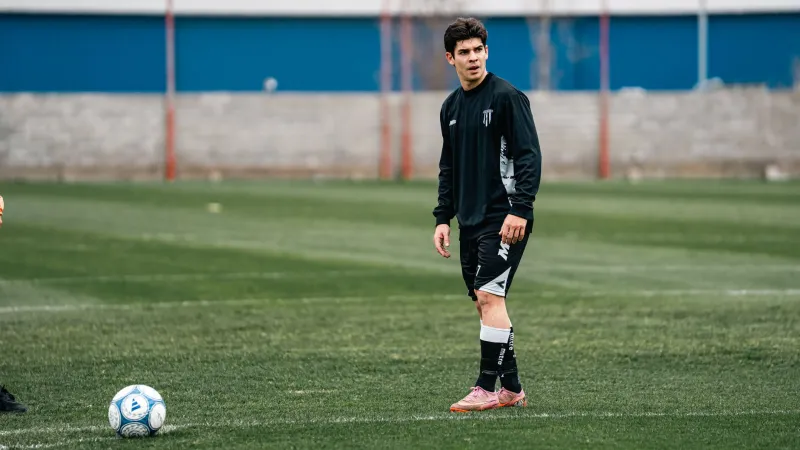
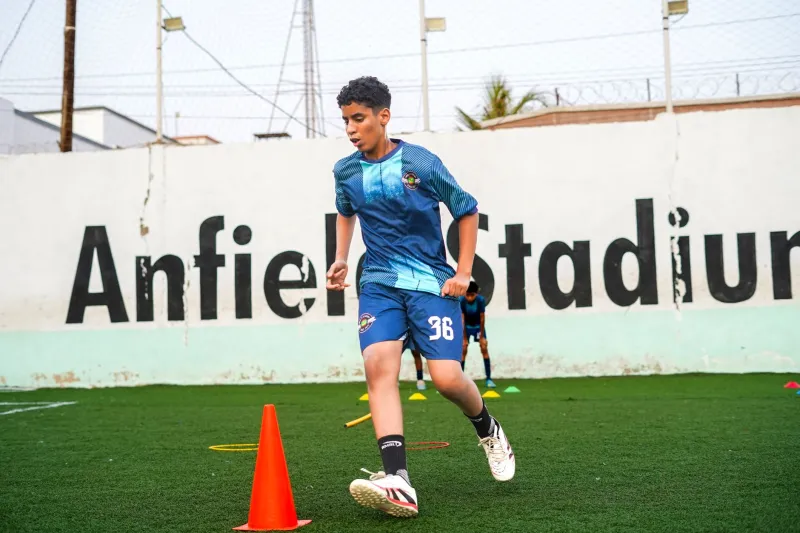
There is a young athlete somewhere in Britain this weekend who will not make training. Not because she lacks commitment, and not because she has lost interest in the sport she has loved since childhood. She will not be there because her mother is working a double shift and there is nobody else to collect her younger siblings from school. Or because the family car failed its MOT and the replacement cannot be afforded until next month. Or because the household she returned to last night was not a safe or peaceful one, and the energy required simply to get through the morning left nothing behind for anything else.
These are not exceptional cases. They are, across British youth sport, extraordinarily common ones. And the coaching frameworks, talent identification systems, and development pathways that govern how we identify and nurture athletic potential in this country are, in the main, designed as though they do not exist.
The Invisible Barrier
British youth sport has made genuine progress in recent years in addressing visible barriers to participation — the cost of kit, the price of registration fees, the accessibility of facilities. Charitable initiatives, Sport England funding streams, and the work of community trusts have collectively made participation more achievable for young people from lower-income backgrounds than it was a generation ago.
But participation and sustained development are not the same thing. A child can attend a football session on a Saturday morning and still be fundamentally unable to access the consistent, long-term engagement that genuine athletic development requires. The barriers that prevent that sustained engagement are frequently invisible to the organisations that run youth sport programmes — not because those organisations are indifferent, but because the barriers in question exist beyond the boundary of the pitch.
Family instability takes many forms in contemporary Britain. It encompasses financial precarity — the chronic, grinding uncertainty of households where income fluctuates, where debt accumulates, where choices between necessities are a constant reality. It encompasses domestic discord, including the profound psychological impact on children of living within relationships marked by conflict, addiction, or emotional volatility. It encompasses housing insecurity, the social disruption of frequent moves, and the particular challenges faced by young people in the care system or navigating complex family structures.
Each of these circumstances imposes a cognitive and emotional burden on young athletes that does not disappear when they cross the white line. It travels with them, shaping their capacity to concentrate, to recover, to engage with coaching, and to sustain the long-term commitment that elite development demands.
What the Research Tells Us
The academic evidence on the relationship between adverse childhood experiences and athletic development is unambiguous in its direction if not always in its specifics. Young people experiencing significant home instability demonstrate measurably higher rates of dropout from organised sport, lower responsiveness to coaching in environments that do not address their broader circumstances, and a significantly elevated risk of what researchers term 'premature exit' from development pathways — the point at which a young person with genuine ability simply ceases to be visible to the systems that might have supported them.
Perhaps most significantly, the research suggests that the young athletes most affected by home instability are disproportionately likely to be those whose athletic gifts are highest. This is not a paradox — it reflects the well-documented relationship between physical talent and early emotional investment in sport. For many young people from difficult home environments, sport is not merely a hobby. It is a sanctuary, a source of identity, and frequently the primary context in which they experience consistency, recognition, and belonging. The loss of that sanctuary, when circumstances at home make sustained participation impossible, carries a weight that extends far beyond the sporting context.
How Clubs Are Beginning to Respond
A small but growing number of British clubs and community sports organisations are developing approaches to youth development that acknowledge the whole life of the young athlete, not merely the portion of it that occurs on the training ground.
Some have introduced informal welfare roles within their coaching structures — individuals whose remit extends beyond tactical development to encompass pastoral support, signposting to community services, and the kind of consistent, reliable adult relationship that many young athletes from unstable homes have rarely experienced. Others have developed flexible attendance and commitment policies that recognise the reality of fluctuating family circumstances, rather than applying rigid expectations that effectively exclude those most in need of the sport's benefits.
The most forward-thinking organisations have begun to build formal partnerships with social services, schools, and mental health providers — creating the kind of integrated support network that surrounds a young athlete with resources that extend beyond the club's own capacity. These partnerships require investment, patience, and a willingness to operate outside the traditional boundaries of what a sports club considers its responsibility. They also, the evidence suggests, produce dramatically better retention rates among young athletes from challenging backgrounds.
The Role of the Coach
At the centre of any meaningful response to this challenge is the individual coach. It is the coach who sees the young athlete most frequently, who notices the changes in demeanour, the fluctuations in energy, the days when something is clearly wrong but nothing is said. The coach who has been trained to recognise these signals — and who has been given the institutional support to respond to them appropriately — is potentially the most powerful protective factor in a vulnerable young athlete's life.
This requires a significant expansion of what British coaching education considers within its scope. The UK Coaching Certificate framework has made important strides in recent years in incorporating safeguarding, mental health awareness, and athlete welfare into its curriculum. But the specific challenges posed by family instability — how to identify them, how to respond without overstepping, how to connect young people with appropriate support while maintaining the trust that makes the coaching relationship possible — deserve far more explicit attention than they currently receive.
Coaches must also be supported by their clubs and trusts to have these conversations without fear of operating beyond their competence. The coach who notices that a young athlete appears to be carrying something heavy deserves clear guidance, proper training, and institutional backing — not the expectation that they will manage complex welfare situations in isolation.
A Broader Responsibility
At The Shots Trust, we are committed to the principle that developing tomorrow's champions means investing in every dimension of a young athlete's potential — including the dimensions that have nothing to do with technique, tactics, or physical conditioning. The young people who carry the heaviest burdens to training are not liabilities to be managed. They are, frequently, the most resilient, the most driven, and the most deserving of the investment that sport can provide.
British youth sport cannot solve the structural inequalities that create family hardship. But it can choose to see them clearly, to respond to them with compassion and intelligence, and to build the kinds of environments in which no young athlete's potential is lost simply because the circumstances of their home life were never taken into account.
The weight they carry is real. The least we can do is acknowledge it.