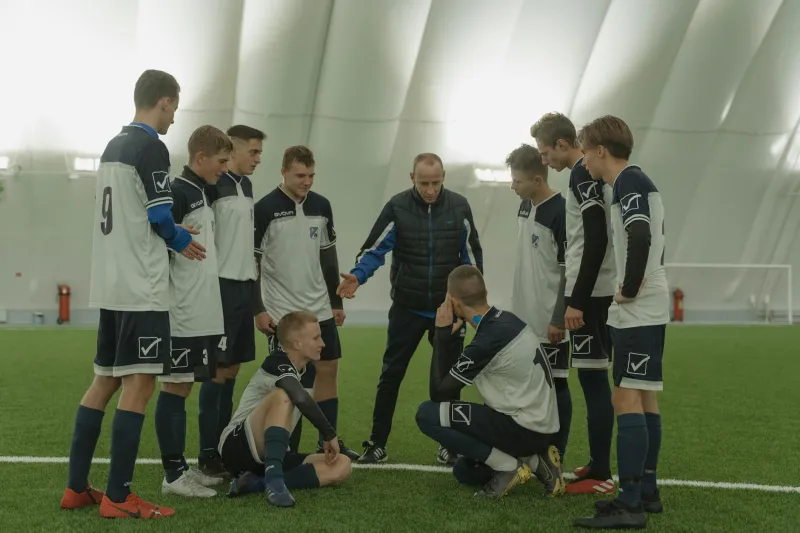
The Hidden Pipeline of English Football
In the shadow of gleaming academy complexes and multi-million-pound training facilities, a quiet revolution is taking place across England's football landscape. From the rain-soaked pitches of Yorkshire to the coastal grounds of Cornwall, grassroots football clubs are proving that world-class talent doesn't require world-class infrastructure—it requires world-class commitment.
The statistics speak volumes. Over 60% of current England internationals began their journey at community clubs rather than prestigious academies. Yet these humble institutions receive a fraction of the recognition afforded to their professional counterparts. This disparity overlooks a fundamental truth: grassroots football provides something that money cannot buy—authentic community connection and resilience forged through adversity.
Beyond Facilities: The Character-First Philosophy
What distinguishes successful grassroots clubs isn't their equipment or facilities, but their unwavering commitment to holistic player development. At Ashington FC in Northumberland, where both Jack and Bobby Charlton honed their skills, the philosophy remains unchanged: character precedes technique.
"We don't just develop footballers; we develop young people," explains Sarah Mitchell, youth coordinator at Whitley Bay FC. "When a lad arrives here at seven years old, we're thinking about the person he'll become at seventeen, not just the player."
This approach manifests in practical ways. Training sessions incorporate decision-making scenarios that mirror real-life challenges. Players learn to handle disappointment through cup defeats, develop leadership skills by mentoring younger teammates, and build resilience through playing in all weather conditions—experiences that sanitised academy environments often cannot replicate.
The Innovation Born from Necessity
Resource constraints have paradoxically become grassroots football's greatest strength, fostering creativity and adaptability that money-rich academies struggle to match. Limited pitch time has led to more intensive, focused training sessions. Smaller squads mean players develop versatility across multiple positions. Mixed-age training groups accelerate learning through peer mentorship.
Take Dulwich Hamlet FC's youth section, where innovative coaching methods have emerged from necessity. Without access to video analysis equipment, coaches developed enhanced observational skills and communication techniques. Players learn to self-assess and provide peer feedback—skills that prove invaluable at higher levels.
"Our constraints force us to be better coaches," notes James Thompson, head of youth development at Isthmian League club Bognor Regis Town FC. "We can't rely on fancy gadgets or perfect pitches. We have to actually coach, and that makes our players more coachable."
Case Studies in Grassroots Excellence
The pathway from park football to professional success is well-documented but rarely celebrated. Jamie Vardy's journey from Stocksbridge Park Steels to Leicester City and England epitomises the grassroots difference. His late-blooming career demonstrates how community clubs nurture players who might be overlooked by traditional academy systems.
Similarly, Dele Alli's development at Milton Keynes Dons' youth system—a club rooted in community engagement rather than elite infrastructure—showcases how grassroots principles can produce international-calibre talent. The emphasis on playing time over prestige, development over instant success, creates an environment where natural ability can flourish without premature pressure.
The Coaching Revolution at Community Level
Grassroots coaching has evolved dramatically over the past decade, with many community clubs now employing methods that rival professional setups. The FA's Coach Education programme has democratised access to advanced coaching qualifications, enabling volunteers to implement sophisticated development strategies.
Local clubs are increasingly adopting position-specific coaching, sports psychology principles, and data-driven approaches to player development. However, they maintain the personal touch that larger institutions often lose. Coaches know their players' families, understand individual circumstances, and adapt their approach accordingly.
"At our level, we coach the whole person," explains Maria Santos, youth coach at Wembley FC. "We know when a player's struggling at school, when parents are going through difficulties, when confidence needs building. That personal connection is irreplaceable."
Practical Applications for Youth Development
The grassroots model offers valuable lessons for all levels of youth sport. First, consistency trumps intensity. Regular training and match opportunities, even at basic facilities, provide more developmental value than sporadic access to premium resources.
Second, adversity breeds resilience. Players who learn to perform on uneven pitches in challenging weather develop adaptability that serves them throughout their careers. The mental fortitude required to succeed in grassroots football often translates directly to professional environments.
Third, community connection enhances motivation. When young players feel they represent their local area, their school friends, their family's tradition, they develop an intrinsic drive that external motivation cannot match.
The Future of Grassroots Development
As English football continues to globalise and commercialise, grassroots clubs represent an essential counterbalance—institutions where football remains a community endeavour rather than a business transaction. Their role in developing not just skilled players but well-rounded individuals becomes increasingly vital.
The challenge lies in ensuring these clubs receive the support they deserve. Government investment, FA programmes, and community backing must recognise that England's football future depends not on a few elite academies but on hundreds of grassroots clubs committed to developing tomorrow's champions today.
In an era obsessed with shortcuts and instant results, grassroots football reminds us that sustainable success requires patience, community, and unwavering commitment to young people's development. The terraces may be smaller, the facilities more modest, but the dreams are every bit as big—and the results speak for themselves.