Breaking the Whistle Ceiling: The Missing Women Who Could Transform British Football from the Inside
The Invisible Barrier
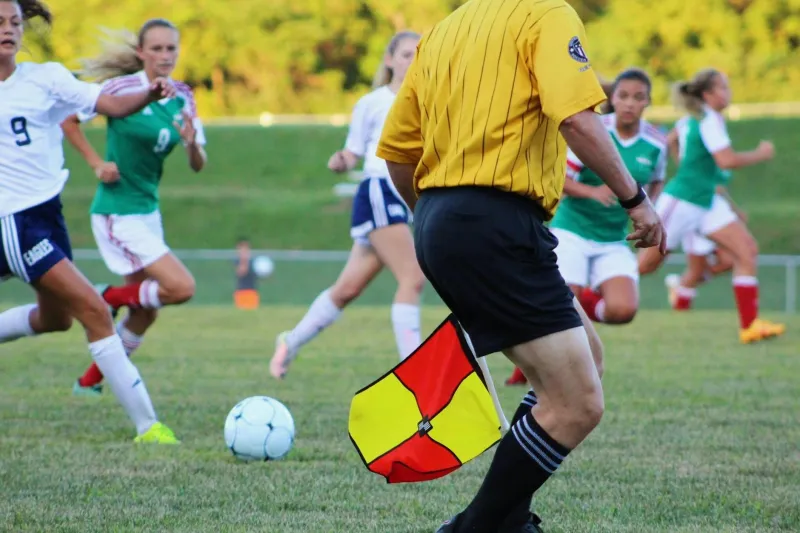
Across Britain's football pitches every weekend, a striking contradiction plays out. Record numbers of girls lace up boots to play the beautiful game, yet the officials controlling their matches remain overwhelmingly male. This disparity represents more than statistical imbalance – it creates a fundamental disconnect that undermines the very foundations of sustainable women's football development.
The numbers paint a stark picture. Whilst female participation has increased by 84% over the past five years, women represent fewer than 8% of registered referees across England, Wales, Scotland, and Northern Ireland combined. This shortage affects every level of the women's game, from grassroots youth football to semi-professional leagues.
The Role Model Deficit
For young girls entering football, the absence of female officials sends subtle but powerful messages about belonging and possibility. When every authority figure on the pitch is male, it reinforces historical notions that football remains fundamentally a man's domain, regardless of who's playing.
"Young players absorb everything about the environment around them," explains Dr Rebecca Clarke, whose research at Leeds Beckett University examines gender dynamics in youth sport. "When girls see that positions of authority and respect are exclusively occupied by men, it shapes their understanding of their own potential within the sport."
 Photo: Leeds Beckett University, via www.leedsbeckett.ac.uk
This psychological impact extends beyond immediate match experiences. Girls who never encounter female referees may struggle to envision themselves in leadership roles within football, whether as future coaches, administrators, or officials themselves.
Cultural and Institutional Obstacles
The barriers preventing women from entering officiating are complex and deeply rooted. Traditional football culture often proves unwelcoming to female officials, with verbal abuse and questioning of competence occurring at rates significantly higher than experienced by male counterparts.
Jenny Williams, a Level 4 referee from Cardiff who officiates women's semi-professional matches, describes the additional scrutiny female officials face: "Every decision gets questioned more intensely. Players, coaches, and spectators seem to assume that women don't understand the game as well, so they feel entitled to challenge everything."
Institutional structures compound these cultural challenges. Referee recruitment often relies on existing networks that remain predominantly male, whilst training environments can feel intimidating for women entering traditionally masculine spaces.
The Pathway Problem
The journey to becoming a qualified referee involves multiple stages that inadvertently disadvantage potential female candidates. Initial courses frequently occur in environments – such as pub function rooms or working men's clubs – that may feel unwelcoming to women.
Moreover, the progression system requires extensive weekend commitment that can conflict with family responsibilities disproportionately affecting women. Without childcare support or family-friendly scheduling, many talented potential officials never complete their qualifications.
Sarah Henderson, Referee Development Officer for the Yorkshire FA, recognises these structural barriers: "We've realised that treating everyone identically doesn't create equal opportunities. Women face different challenges entering officiating, so we need different support systems."
Pioneering Programmes
Across Britain, innovative initiatives are beginning to address the female referee shortage through targeted recruitment and support programmes. The Scottish FA's 'Women in Refereeing' scheme provides mentorship, flexible training schedules, and guaranteed placements for newly qualified officials.
Similarly, the Welsh FA has introduced female-only referee courses that create supportive learning environments whilst addressing specific concerns about entering male-dominated spaces. These programmes report significantly higher completion rates compared to traditional mixed courses.
Grassroots organisations are also developing creative solutions. Several county FAs now offer childcare during training sessions, whilst others have established women-only WhatsApp groups providing ongoing support and encouragement for female officials.
The Ripple Effect
The benefits of increased female referee representation extend far beyond symbolic importance. Research suggests that female officials bring different communication styles and conflict resolution approaches that can enhance match experiences for all participants.
Moreover, women who progress through referee ranks often develop broader leadership skills that benefit football organisations in multiple capacities. Many female referees transition into coaching, administration, or governance roles, addressing gender imbalances across football's ecosystem.
Youth Development Impact
The referee shortage particularly affects girls' youth football, where the absence of female role models combines with critical developmental periods. Teenage girls, already navigating complex identity formation, benefit enormously from seeing women in positions of authority and respect.
Clubs with female referees report improved behaviour from players, coaches, and parents during girls' matches. The presence of women officials seems to elevate the perceived importance and legitimacy of girls' football within broader club cultures.
Breaking Down Barriers
Successful programmes share common characteristics: they acknowledge gender-specific challenges rather than ignoring them, provide ongoing support beyond initial training, and create pathways for progression that accommodate different life circumstances.
The most effective initiatives also address the cultural environment surrounding women's football, educating clubs, coaches, and parents about appropriate behaviour towards female officials whilst establishing zero-tolerance policies for gender-based abuse.
The Business Case
Beyond social justice arguments, the female referee shortage represents a significant missed opportunity for football's growth. With women's football generating increasing commercial interest, the lack of female officials creates perception problems that may deter sponsors and broadcasters seeking authentic gender representation.
Moreover, the shortage of qualified officials limits the number of women's matches that can be scheduled, constraining league growth and player development opportunities.
Future Foundations
Addressing the female referee crisis requires coordinated action across multiple levels. National associations must reform recruitment and training practices, whilst grassroots organisations need to create more welcoming environments for female officials.
Equally important is cultural change within football communities. Parents, coaches, and players must understand that supporting female referees isn't about political correctness – it's about creating sustainable foundations for women's football growth.
The Transformation Potential
The opportunity before British football is immense. By systematically addressing barriers to female referee recruitment and retention, the sport can create virtuous cycles where increased representation attracts more participants, which in turn generates demand for additional officials.
This transformation requires recognising that referee diversity isn't a peripheral concern but a fundamental requirement for sustainable women's football development. The young girls taking their first steps in football deserve to see that every role within the beautiful game is genuinely open to them.
The future of women's football depends not just on the players running onto the pitch, but on the women brave enough to pick up the whistle and take control of the game.